Home › Commercial Concrete Repair and Restoration
Reliable, professional commercial concrete repair in Pittsburgh, PA from Superior Concrete Pittsburgh. Contact us today for a free on-site estimate.
Superior Concrete Pittsburgh provides professional commercial concrete repair throughout Pittsburgh, PA, Pennsylvania and the surrounding area. Our licensed, insured crew delivers safe, clean, on-time work with a free estimate before anything begins. Call (412) 223-8423 or request your free quote.
Commercial Concrete Repair in Pittsburgh That Keeps Your Business Moving
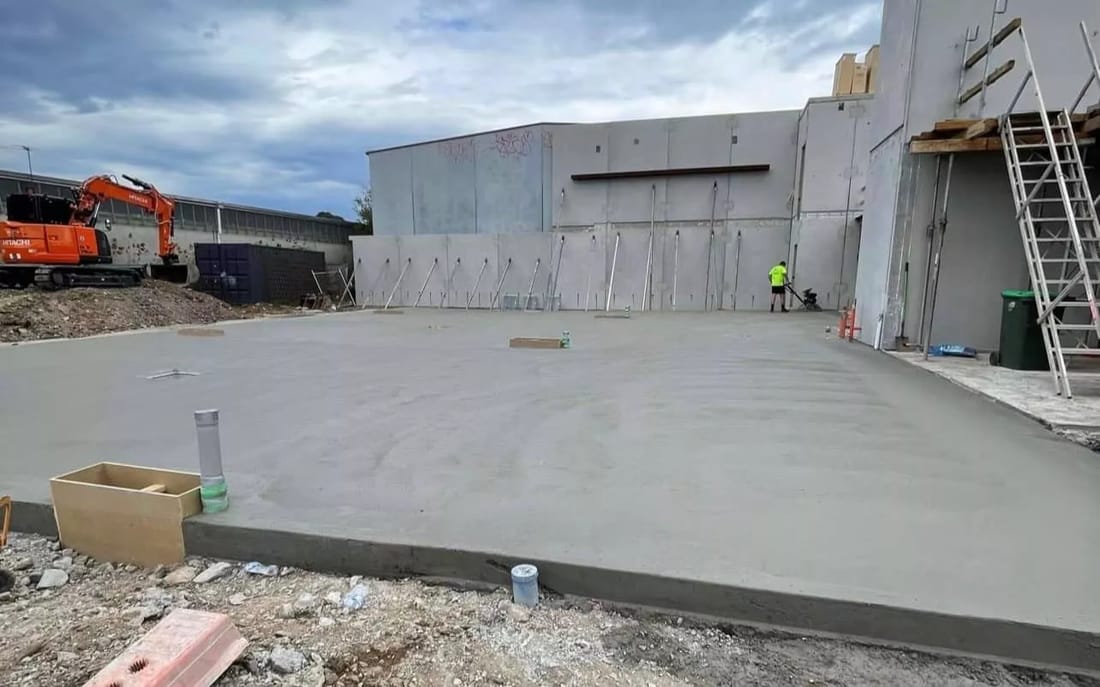
When you call Superior Concrete Pittsburgh for commercial concrete repair, our first priority is to protect your operations and your customers. We start with a detailed site walk of your property, looking at traffic patterns, drainage, and how your concrete is actually being used day to day. In Pittsburgh, that often means loading docks exposed to freeze and thaw cycles, cracked warehouse slabs with forklift traffic, and spalled sidewalks around retail entrances.
We take moisture readings, check slab thickness (when possible), map where the worst movement or settlement is happening, and look for telltale signs like rust staining that can indicate failing rebar. This kind of diagnosis matters more than any quick fix, because it tells us whether you need surface restoration, structural repair, or full-depth replacement in select areas. You get a clear explanation on site, photos of damage, and a written plan that separates what is urgent from what can be budgeted for later.
Our crews are used to working around active stores, medical offices, industrial facilities, and multi-tenant buildings. We can phase the repair so only part of a parking lot, dock, or entry is closed at any one time, and we schedule the noisiest or most disruptive work for off-hours whenever possible. The goal is simple: restore the concrete and reduce risk without shutting your operation down.
Common Commercial Concrete Problems We See in Western Pennsylvania
Pittsburgh’s freeze-thaw cycles, road salt, and steep grades are rough on commercial concrete. At Superior Concrete Pittsburgh, the most frequent calls we receive are for heaved sidewalks that create trip hazards, crumbling dock aprons where trucks back in, settled sections of parking lots that hold standing water, and interior slabs that have cracked and curled under heavy racking or equipment.
On exterior concrete, surface scaling and pop-outs often come from years of deicing salts and poor drainage. Water trapped near joints freezes, expands, and breaks the surface apart. We evaluate whether the damage is limited to the top quarter inch or if it reaches deeper, which determines if a resurfacing product, a partial-depth patch, or a full-depth panel replacement is appropriate. In loading zones, we pay special attention to joint failure and crushed slab edges where trailer wheels repeatedly roll. These areas usually require reinforced repairs and higher strength concrete.
Interior slabs in warehouses and production areas often develop random cracking, especially where sawn control joints were not placed correctly or heavy point loads were not planned for. We examine the crack width and movement. Stable hairline cracks can be cleaned and filled with semi-rigid epoxy joint filler that supports forklift traffic. Active or wide cracks may need stitching with embedded ties or partial slab replacement. In older buildings, we also check for vapor issues that can affect floor coverings or cause coating failures, a common problem when owners want to add epoxy or urethane floors over existing concrete.
Our Step-by-Step Commercial Concrete Repair and Restoration Process
Every commercial concrete repair project with Superior Concrete Pittsburgh follows a clear, documented process so you know what will happen and when.
1. Assessment and planning: We meet on site, identify safety hazards, measure and map failing sections, and discuss your operational schedule. You receive a written scope that distinguishes short-term safety fixes from longer-term restoration, so you can align repairs with your maintenance budget.
2. Site preparation and safety control: Before work begins, our crew sets up barricades, signage, and alternate paths for pedestrians and vehicles. We coordinate with your staff on traffic control for delivery trucks, shuttles, or forklifts. Nearby surfaces are protected from dust and splatter. If work is indoors, we plan dust collection and ventilation.
3. Demolition and substrate preparation: For full-depth repairs, we saw cut clean edges and remove deteriorated concrete to the required depth, then haul debris off site to an appropriate facility. For patching or overlays, we mechanically prepare the surface by grinding or shot blasting to remove weak material, laitance, sealers, or coatings. This step is critical, because most repair failures are due to poor surface prep, not the repair material.
4. Structural repairs and reinforcement: Where rebar or wire mesh is exposed or corroded, we clean steel to sound metal, assess section loss, and either treat and encase it or add supplemental reinforcement. In dock aprons or heavy-traffic slabs, we often dowel new concrete into existing concrete with epoxy-set steel bars to lock everything together.
5. Placement of repair materials: Depending on the design, we install a bonded repair mortar, a polymer-modified topping, or new ready-mix concrete. Mixes are selected for strength, air entrainment for freeze-thaw resistance, and in some cases, accelerated set so areas can reopen sooner. Workability and finish are matched to the use of the area, for example broom finish for exterior walking surfaces or smooth trowel finish for interior industrial floors.
6. Finishing, curing, and joint detailing: We tool or saw new joints where needed, match existing slopes for drainage, and set appropriate texture for slip resistance. Proper curing is maintained using curing compounds or wet curing methods to reduce shrinkage cracking. At the end, we seal joints and, if specified, apply penetrating sealers to protect from water, salt, and staining.
7. Final walk-through and maintenance guidance: Once the repaired areas are ready for use, we walk the site with you, explain what was done, and provide basic care instructions, including when to avoid deicers on new exterior concrete and how to handle snow removal blades to protect edges.
Repair Options, Materials, and Finish Choices for Commercial Properties
Commercial concrete repair is not one-size-fits-all, especially in a climate like Pittsburgh. Superior Concrete Pittsburgh recommends repair systems based on how each area is used, your downtime limits, and future plans for the property.
For exterior sidewalks, stairs, and plazas, we often use air-entrained concrete or polymer-modified repair mortars that stand up better to freeze-thaw cycles. Where appearance is important, such as office entrances or retail storefronts, we can broom, float, or lightly texture the finish so repairs blend with existing concrete. On larger restorations, we may recommend a thin bonded overlay across a wider area so the repaired section does not stand out visually.
Loading docks and industrial pavements typically need higher strength mixes and better reinforcement. Here, we might specify 4,500 to 5,000 psi concrete, doweled into the existing slab, sometimes with fiber reinforcement to help control cracking. In some cases, especially for distribution centers, we may propose rapid-setting cementitious materials that allow truck traffic within 4 to 8 hours, which can be important if you cannot close a dock for long.
For interior commercial floors, repair choices are driven by what will be on top of the slab. If you plan to install or maintain epoxy coatings, polished concrete, or tile, we use compatible patch materials that will accept grinding, polishing, or thin-set. Joint fillers are selected with forklift traffic and temperature swings in mind so they remain firm enough to support wheels but flexible enough not to shatter in winter.
We also discuss protective treatments as part of restoration. Penetrating sealers can reduce salt damage in parking areas and sidewalks. In mechanical rooms or service corridors, chemical-resistant coatings can prevent future deterioration from spills. These options are not just add-ons, they are part of making sure your repair lasts more than a couple of seasons.
What Affects Cost and Timeline for Commercial Concrete Repair
Superior Concrete Pittsburgh is transparent about what drives the price and schedule of commercial concrete repair so you can make informed decisions.
The first cost factor is scope: how many square feet need repair, and at what depth. Full-depth replacement of a 6 inch thick truck slab with reinforcement costs more than resurfacing a weathered sidewalk, but in high-load areas a thin repair on a failing base is usually false economy. We will show you where a less expensive repair is realistic and where it is not.
Access and phasing also impact cost. Sites in tight urban areas, garages with low clearances, or locations that require night work or complex traffic control will be priced differently from open lots with easy truck and equipment access. If you need us to work in small sections to keep your business open, that can increase labor and mobilization time, but often saves you money overall by avoiding lost revenue from full closures.
Material selection matters too. Rapid-setting or specialty repair materials generally cost more per bag or per yard than standard mixes, but they can reduce downtime and the need for temporary workarounds. In many cases we present a standard option and a fast-track option so you can weigh material cost against business interruption.
Underlying conditions can change scope. If we uncover poor subgrade, voids, or extensive corrosion once demolition begins, we will stop, show you the issue, and price the additional work before proceeding. Our goal is that you are never surprised by an invoice. For planning, most commercial clients appreciate rough budget ranges early, then more precise proposals after a detailed site review.
Timeline is typically influenced by weather for exterior work, required cure times, and your operating schedule. In Pittsburgh, we plan around winter conditions and avoid placing exterior flatwork during deep freezes unless special measures are taken. For critical areas, we can often stage work to keep at least one path, lane, or dock operational while another is being repaired.
Why Pittsburgh Businesses Choose Superior Concrete Pittsburgh
Commercial concrete repair and restoration is not just about making old concrete look better. It is about safety, liability, and protecting a major asset on your property. Businesses across Pittsburgh and the surrounding communities come to Superior Concrete Pittsburgh because we focus on those priorities first.
We understand local building department expectations, ADA considerations for ramps and walkways, and the insurance concerns that arise from trip hazards or deteriorating loading areas. Our crews are trained to work in active commercial environments, with clear communication to your staff about where they can and cannot walk or drive on any given day.
We also know that many property managers inherit concrete that has been patched repeatedly with mismatched materials. As part of our service, we help you develop a multi-year plan that identifies which areas should be addressed now because of risk, which can be monitored, and where a larger phased restoration might make more financial sense than constant small patches.
If you manage a facility in Pittsburgh, PA and are dealing with cracked, settled, or deteriorating concrete, Superior Concrete Pittsburgh can inspect your site, explain your options in plain language, and deliver repairs that stand up to our region’s climate and your day-to-day operations. From small but urgent safety fixes to complex multi-phase restoration, we tailor our work to the realities of your business rather than forcing you into a generic solution.