Home › Commercial Concrete Slabs and Flatwork
Reliable, professional commercial concrete slab in Pittsburgh, PA from Superior Concrete Pittsburgh. Contact us today for a free on-site estimate.
Superior Concrete Pittsburgh provides professional commercial concrete slab throughout Pittsburgh, PA, Pennsylvania and the surrounding area. Our licensed, insured crew delivers safe, clean, on-time work with a free estimate before anything begins. Call (412) 223-8423 or request your free quote.
Commercial Concrete Slabs in Pittsburgh That Are Built to Work Hard
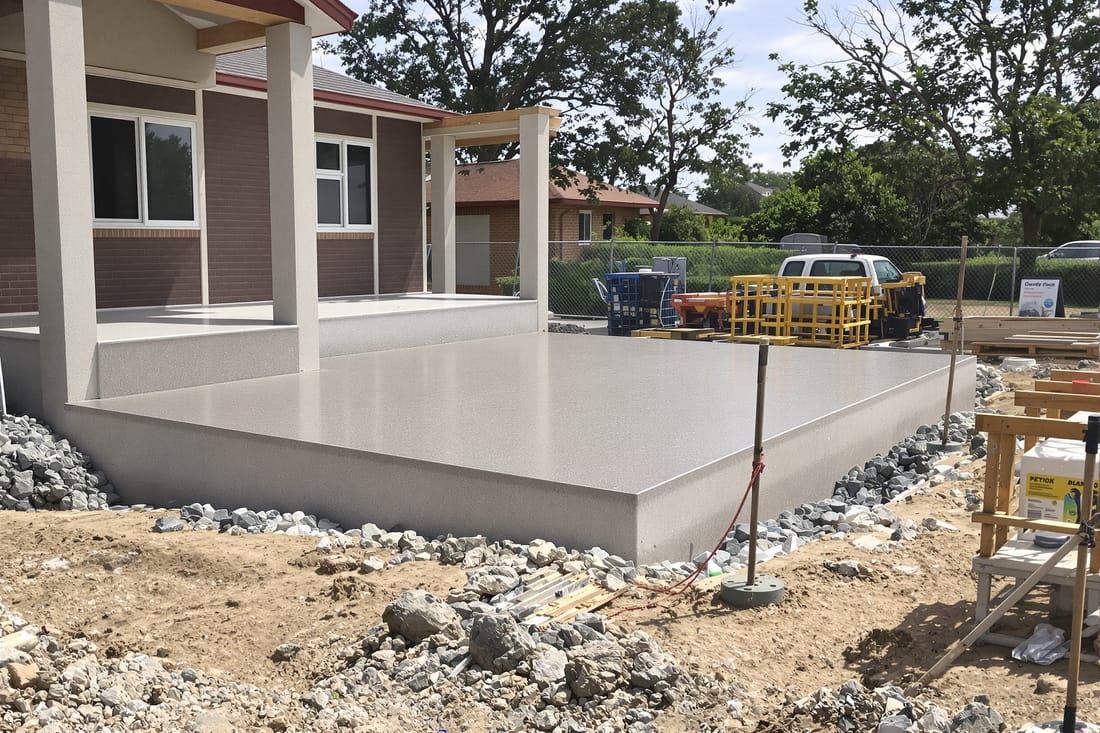
When you pour a commercial concrete slab in Pittsburgh, you are not just filling a rectangle with concrete. You are building the surface that has to carry forklifts, pallet racks, delivery trucks, or foot traffic every single day. At Superior Concrete Pittsburgh, we focus on commercial slabs and flatwork that match how your building is actually used, not just what looks good on the drawings.
A well designed commercial concrete slab starts with load expectations and traffic patterns. We ask questions like: Will you be using pallet racking with narrow aisles. Do you expect point loads from heavy machinery. Will there be frequent freeze and thaw at loading dock entrances. This lets us size the slab thickness, reinforcement, and concrete mix correctly so you are not dealing with cracking, curling, or spalling a year after opening.
For Pittsburgh projects, we also account for our real climate and soils. Many commercial sites around Allegheny County have clay or fill that holds water. If the subgrade is not properly prepared and drained, you can get slab heaving, settlement, or joint failure. Superior Concrete Pittsburgh builds every commercial slab on a compacted, proof rolled base, with drainage and vapor control tailored to each site. That local experience is what keeps the slab functioning through our wet springs and freeze cycles.
How We Build Commercial Slabs and Flatwork Step by Step
There is a clear process to getting a durable commercial concrete slab, and each step affects long term performance and cost.
1. Site evaluation and layout. We start by walking the site with your plans and checking grades, existing utilities, and access for trucks and pumps. In many Pittsburgh neighborhoods, access can be tight, especially in older industrial districts. Planning where trucks can stage and how we will place concrete is critical to keeping the pour continuous and consistent.
2. Subgrade prep and base stone. We strip organics and soft material, then compact the native soil. After that we typically install a layer of compacted crushed stone, often 4 to 8 inches depending on loads and soil conditions. On wetter sites or fill areas, we may recommend thicker stone, geotextile fabric, or underdrains to keep water from pumping through joints and cracks.
3. Vapor barrier and reinforcement. For interior commercial slabs that will receive tile, polished concrete, epoxy, or other sensitive finishes, we install a vapor barrier to control moisture from the ground. On top of that, we place reinforcement per design, usually welded wire mesh, rebar grids, or structural fiber in the mix, or a combination. For warehouse and industrial floors, we often use rebar at column lines and heavy traffic zones and macro fibers in the slab field to help control shrinkage and impact.
4. Forming and pour. We set accurate forms and screed guides to achieve the slab thickness and slopes shown on your drawings. During the pour, we place concrete using chute, buggy, or pump depending on access. Maintaining consistent slump and working the concrete quickly is vital for flatness. Our crews use vibrating screeds, internal vibrators along thickened edges, and straightedges to remove waves and honeycombing.
5. Finishing, curing, and joints. Once screeded, we bring the surface to the finish you need: broom finish for exterior commercial flatwork like loading areas and sidewalks, or machine trowel for interior floors. We do not rush finishing, which is a common cause of weak surfaces and dusting. After finishing, we apply curing compound or install wet cure methods, then cut control joints at calculated spacing to manage shrinkage cracking.
At every step, we document what we are doing so your GC, architect, or owner’s rep can verify that the slab is being installed to spec.
Concrete Mixes, Thickness, and Finish Options for Your Facility
Not every commercial concrete slab is the same. The right choice depends on what sits on top of it and what rolls across it.
For thickness, light commercial spaces like standard retail or office areas may use 4 to 5 inch slabs. Auto shops, loading docks, and storage areas with forklifts often need 6 inches or more. Heavy industrial or high rack warehouse floors can jump to 8 inches or more, sometimes with thickened sections under columns or equipment pads. Superior Concrete Pittsburgh helps you coordinate with your engineer so the slab thickness and reinforcement match your usage rather than guessing from a rule of thumb.
Concrete mix design also matters. In Pittsburgh, cold winters and deicing salts at exterior entries push us toward air entrained mixes for exposed slabs to resist freeze and thaw damage. For interior industrial floors we focus more on strength, abrasion resistance, and shrinkage control. This might mean a higher psi mix, low water to cement ratio, and the addition of fibers, hardeners, or specialty admixtures that reduce cracking and curling.
Finish options depend on performance and safety. For busy sidewalks, ADA routes, and exterior flatwork we use broom or textured finishes to keep slip resistance high in rain and snow. For interior commercial spaces we can provide machine troweled, burnished, or trowel and polish ready finishes, coordinated with your floor coating contractor. In warehouses where rack alignment and forklift safety depend on flat floors, we can target higher floor flatness and levelness standards, known as FF and FL numbers, and we adjust our placement and finishing techniques to hit those requirements.
We also think ahead about future changes. If you might add machinery or reroute traffic later, we can plan extra reinforcement or embed conduit and sleeves so you do not need to cut and patch the slab extensively down the line.
What Really Drives Cost and Long Term Performance
Commercial concrete slab pricing in Pittsburgh is not just about square footage. Several hidden factors can push the price up or down, and understanding them lets you make smarter decisions.
Subgrade condition is one of the biggest variables. A flat, well drained site with decent native soil may need minimal prep. A site with soft spots, utilities to work around, or existing slabs to demolish will require more excavation, stone, and labor. Superior Concrete Pittsburgh always recommends addressing these issues up front. Skipping proper base prep might save money this month but can lead to cracks, slab settlement, and joint failure that cost much more to repair while your building is occupied.
Thickness and reinforcement are another driver. Increasing slab thickness by 1 inch across a large warehouse can add significant material cost, but for heavy use facilities it is often cheaper than dealing with early failures. We help you balance reinforcement types too. Fiber reinforced concrete can control microcracking and improve impact resistance, but it might not replace rebar in high load or column strip areas. Using the right combination of mesh, rebar, and fiber can often save money without sacrificing performance.
Access and schedule also affect cost. City jobs with limited truck access, narrow alleys, or restricted hours require more planning and sometimes concrete pumps or smaller loads. Winter pours in Pittsburgh may need heated enclosures, ground thawing, and cold weather admixtures to protect the concrete. Summer pours during heat waves might need early morning schedules and additional manpower for finishing.
Long term performance is influenced by curing and joint layout at least as much as by mix strength. Proper curing keeps the surface dense and durable, which is critical if you plan to polish, seal, or coat the floor. Joints that are sawcut at the right time and at correct spacing reduce random cracking. For high traffic joints such as in warehouse aisles, we often recommend dowel baskets and heavy duty joint fillers so forklifts can roll smoothly for years without chipping and spalling at the joint edges.
Local Considerations for Pittsburgh Commercial Projects
Working in Pittsburgh brings a mix of older industrial buildings, tight urban lots, and hilly sites. That combination makes local experience important when you plan a commercial concrete slab.
Older buildings being converted to light manufacturing, breweries, or commercial kitchens often have undersized or deteriorated slabs. Superior Concrete Pittsburgh can assess whether a slab can be repaired, overlayed, or needs full replacement. We look for signs like slab thickness at core samples, rebar corrosion, hollow sounding areas, and past moisture or chemical exposure. In many cases, strategic partial replacement and new topping slabs give you the loading capacity and level surface you need without tearing everything out.
Hilly sites and frost exposure are another Pittsburgh reality. Exterior commercial flatwork such as ramps, dumpster pads, and loading areas must shed water away from the building. We build in proper slopes, drain locations, and isolation joints around foundations and columns so freeze cycles do not jack the slab away from the structure. When flatwork meets asphalt, such as at parking lot transitions, we coordinate with your paving contractor to minimize trip edges and long term separation.
Local codes, inspection practices, and ready mix supply also matter. We coordinate mix designs and testing with area labs and inspectors, and we schedule pours based on realistic plant and traffic conditions around Pittsburgh, not generic assumptions. That helps avoid cold joints, delays, and rejected loads.
From pre construction planning to final sealing and striping overlap, Superior Concrete Pittsburgh works with your GC, engineer, and other trades so your commercial concrete slab becomes a reliable backbone for the whole project, not a headache to work around.