Home › Garage and Basement Concrete Floors
Reliable, professional concrete garage floor in Pittsburgh, PA from Superior Concrete Pittsburgh. Contact us today for a free on-site estimate.
Superior Concrete Pittsburgh provides professional concrete garage floor throughout Pittsburgh, PA, Pennsylvania and the surrounding area. Our licensed, insured crew delivers safe, clean, on-time work with a free estimate before anything begins. Call (412) 223-8423 or request your free quote.
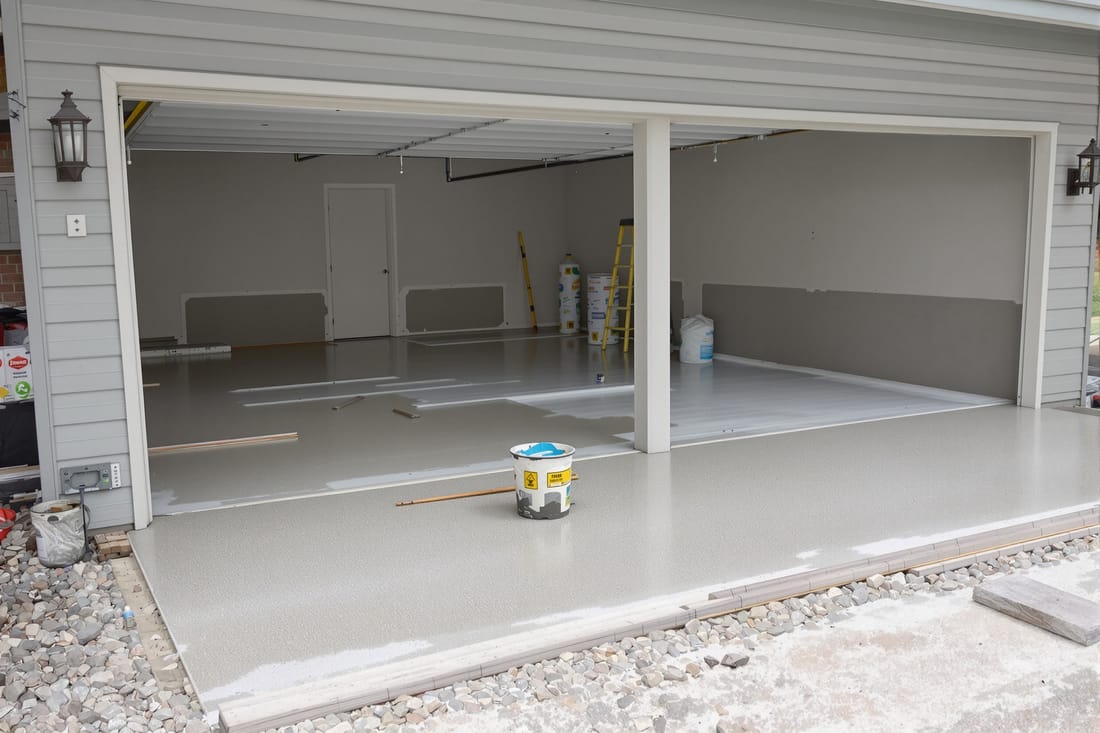
Durable Concrete Garage Floors for Pittsburgh Homes
A concrete garage floor in Pittsburgh has to stand up to snow, rock salt, and constant freeze-thaw cycles, not just parked cars. At Superior Concrete Pittsburgh, we build garage slabs that handle all of that by focusing on the right mix design, base preparation, and finishing methods for Western Pennsylvania conditions.
For most residential garages, we typically pour a 4 to 5 inch thick slab using a 4,000 PSI air-entrained concrete mix. Air entrainment is important in our climate because it gives water room to expand when it freezes, which reduces surface scaling and pitting. In garages that will see heavy trucks, lifts, or workshop equipment, we may recommend thicker sections or localized thickened pads under heavy loads.
We also pay attention to how meltwater and rain run back into the garage from your driveway. When we design a concrete garage floor, we pitch the slab slightly toward the overhead door or a floor drain so water does not sit and cause slick spots or long-term surface damage. All of this is planned on site after we look at your driveway, grading, and how water moves around your property.
Basement Concrete Floors Built for Living, Storage, or Finishing Later
Basement floors in Pittsburgh serve very different purposes depending on whether the space is unfinished storage, a laundry area, or a future family room. Superior Concrete Pittsburgh customizes the slab details to match how you plan to use the space instead of defaulting to a one-size-fits-all approach.
For unfinished or utility basements, a standard 4 inch slab with a durable broom finish is usually enough, along with control joints to manage cracking. If you plan to finish the basement later with flooring like vinyl planks, carpet, or epoxy, we tighten our flatness tolerances and use a steel trowel finish that makes it easier for your future installer to get a smooth, even surface.
We also look closely at headroom and existing foundation conditions in older Pittsburgh homes, especially in neighborhoods with legacy housing like Lawrenceville, Brookline, and Dormont. In some cases, we can adjust slab thickness, add a slight recess where tile or radiant heat will go, or coordinate with your remodeler to keep ceiling heights comfortable while still providing a solid, code-compliant floor.
Our Step-by-Step Process for Garage and Basement Floors
Every concrete garage floor or basement floor we install follows a clear, structured process so you know what is happening at each stage.
1. Site visit and evaluation. We inspect your existing slab or soil, look for signs of moisture intrusion or settlement, check access for concrete trucks, and discuss how you will use the space. For basements, we also evaluate ceiling heights and existing utilities.
2. Demolition and excavation. If there is an existing cracked or heaved slab, we break it up, haul it away, and excavate to the proper depth. In garages, we make sure the subgrade ties in smoothly with your driveway and any existing aprons.
3. Base preparation. We compact a layer of crushed stone, usually 4 to 6 inches, using plate compactors so the sub-base will not settle. In basements, we add a vapor barrier over the stone to help control ground moisture migration up into the slab.
4. Reinforcement. Depending on the project, we use welded wire mesh, rebar grids, or fiber-reinforced concrete. For garages that will see heavy tools or vehicles, we often combine steel reinforcement with fibers for additional crack control.
5. Forming and detailing. We install forms, set slab elevations, and lay out control joints in advance. In garages, we also account for door tracks, steps into the house, and any trench drains or floor drains you want.
6. Pouring and finishing. We place the concrete, screed it to level, float, and then finish it with a broom or trowel pattern that suits the use. In garages prone to salt and slush, we like a light broom texture that provides traction without being hard to clean.
7. Curing and sealers. After finishing, we apply curing compounds or advise on wet curing, then return once the slab has reached the right strength to apply penetrating sealers or garage-specific coatings if you choose that option.
Surface Options, Coatings, and Design Choices
Concrete garage floors and basement floors do not have to be plain gray unless you want them to be. Superior Concrete Pittsburgh offers a range of finishing options so the surface matches how you live and work.
In garages, you can choose between a simple broom finish, a smooth trowel finish, or a floor prepared for epoxy or polyaspartic coatings. When coatings are planned, we pay special attention to finishing and curing so the pores of the concrete are in good condition for mechanical grinding and chemical bonding later.
For basements, we often install a tight steel-troweled finish that can be stained, polished, or covered with LVP (luxury vinyl plank) or other flooring. Stained concrete floors can provide a warm look in lower-level living spaces, and polished concrete is popular in basement home gyms or hobby rooms where durability and easy cleaning matter.
We also plan joint layouts with the final look in mind. For example, in a basement that will be partially finished, we try to align control joints with future wall locations to keep visible joints out of your main living area. In garages, we place joints to help minimize random cracking under tire paths and where you might install cabinets or a workbench later.
What Affects Cost for a Concrete Garage Floor or Basement Slab
Customers in Pittsburgh often ask why pricing can vary so much between quotes for similar sounding concrete garage floor or basement floor projects. The main cost drivers are site conditions, thickness, reinforcement, access, and moisture management.
Site conditions include how much demolition is needed, whether old concrete must be hauled out of a tight city alley, and how level or compactable the existing soil is. A garage in a narrow city lot in the South Side typically costs more to service than a driveway-accessible suburban garage simply because of labor and access.
Slab thickness and reinforcement also matter. A basic 4 inch slab with fiber reinforcement is more affordable than a thicker slab with both rebar and wire mesh for heavy use or poor subgrade. In basements with a history of minor settlement or in older stone foundations, we may recommend additional reinforcement to reduce the risk of movement.
Moisture management is another factor. Adding vapor barriers, drainage matting, or tying into sump systems adds cost, but these measures are very valuable in parts of Pittsburgh with higher water tables or hillside foundations. When we quote, we walk through each element so you understand what is included and what is optional based on your goals and budget.
Common Local Problems and How We Address Them
Pittsburgh homes face unique challenges when it comes to garage and basement concrete floors. Superior Concrete Pittsburgh has seen most of them and designs repairs or new slabs accordingly.
In garages, the big enemies are road salt, freeze-thaw cycles, and poor drainage at the driveway connection. We combat these by specifying air-entrained mixes, proper slope to the door or drains, and recommending regular sealing. Where old garage slabs are already spalled or pitted, we typically remove and replace instead of applying thin overlays that will not hold up to winter abuse.
Basements often struggle with moisture from hillside runoff, older stone or block foundations, and seasonal groundwater changes. Before we pour, we look for signs like efflorescence, damp walls, or past water lines. Depending on what we find, we may recommend coordinating with a waterproofing contractor to install perimeter drains or improve the sump system. We then include vapor barriers and careful joint detailing to help keep your new slab dry and usable.
Cracking is another frequent concern. All concrete cracks to some extent, but where and how it cracks can be controlled. We place control joints at calculated intervals based on slab size and layout, use appropriate reinforcement, and manage curing so the slab dries more evenly. This approach greatly reduces the chance of large, random cracks that can trip you or telegraph through finished flooring.
Timing Your Project and Why Local Experience Matters
In Western Pennsylvania, timing your concrete garage floor or basement project can improve results. The most reliable window for exterior garage work is typically April through October, when daytime temperatures stay warm enough for proper curing and there is less risk of snow or ice. We can pour in colder weather with additives and protective measures, but the logistics and cost are different and we discuss that upfront.
Basement floors are more flexible in terms of scheduling since they are inside, but humidity and temperature still matter for curing and for any coatings you might want to apply later. We often coordinate with other trades on remodels so the concrete work happens at the right stage, before framing and utilities block access.
Working with a contractor that knows Pittsburgh housing stock and terrain means less guesswork. Superior Concrete Pittsburgh is familiar with row homes on narrow lots, steep driveways in neighborhoods like Beechview and Mt. Washington, and high water table issues along the rivers. That local experience shapes the mix we order, the drainage solutions we suggest, and even how we plan truck access or concrete pumping.
When you contact us, we meet you on site, discuss your goals for the space, review options for thickness, finish, and moisture control, then provide a clear written proposal. Our aim is to give you a concrete garage floor or basement floor that feels like a long-term improvement to your Pittsburgh home, not a short-term patch.