Home › Sitework and Structural Concrete
Reliable, professional structural concrete in Pittsburgh, PA from Superior Concrete Pittsburgh. Contact us today for a free on-site estimate.
Superior Concrete Pittsburgh provides professional structural concrete throughout Pittsburgh, PA, Pennsylvania and the surrounding area. Our licensed, insured crew delivers safe, clean, on-time work with a free estimate before anything begins. Call (412) 223-8423 or request your free quote.
Sitework and Structural Concrete Expertise in Pittsburgh
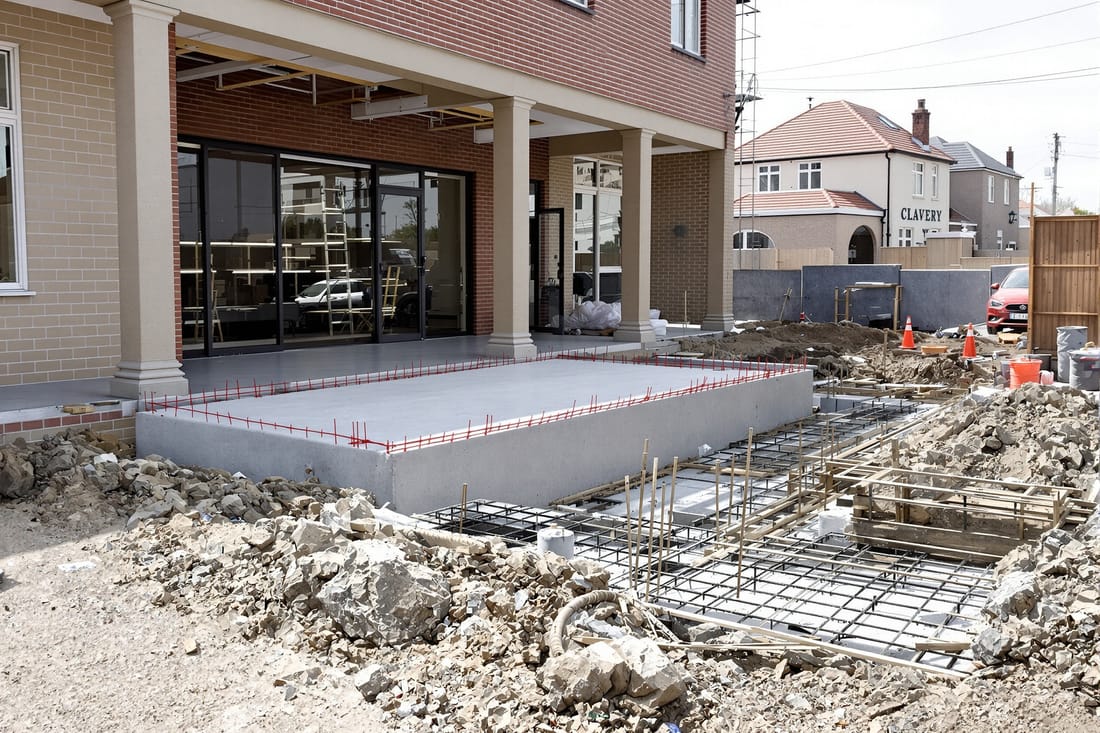
Superior Concrete Pittsburgh provides sitework and structural concrete services for commercial, industrial, and residential projects throughout the Pittsburgh region. We focus on the concrete that actually carries the load: foundations, footings, slabs, walls, piers, and structural flatwork, along with the site preparation that supports them.
Our team is experienced with the realities of building in Western Pennsylvania. Steep slopes, variable soil conditions along the rivers and hills, and freeze-thaw cycles all influence how structural concrete must be designed and installed in Pittsburgh. We coordinate with your architect or engineer, or bring in trusted local engineers when needed, so the structural concrete matches the actual site conditions, not just a generic detail pulled from a plan book.
Whether you need a new building foundation, a structural slab for heavy equipment, or site concrete that ties into existing structures, we manage the process from excavation to final finish. Our goal is to deliver concrete that performs for decades in Pittsburgh weather, not just looks good on day one.
What Sitework Includes Before Structural Concrete
Strong structural concrete starts with proper sitework. For projects in and around Pittsburgh, this typically involves clearing, excavation, grading, trenching for utilities, and building a stable subbase for the new structure.
We begin with a site visit and layout, verifying property lines, benchmarks, and proposed elevations. On sloped Pittsburgh lots, we often recommend minor regrading or retaining solutions to control drainage before any forming begins. Our crews handle excavation for footings, basement levels, pier pads, and utility trenches, using equipment sized to your site so we can work efficiently in tight city lots or larger suburban parcels.
Subgrade preparation is critical in this region, where clay soils and fill material are common. We remove unsuitable material, compact the remaining soil to specified density, and install stone base where required. For structural slabs that will support vehicles or heavy racking, we pay close attention to subbase thickness and compaction testing. Proper sitework reduces settlement, slab cracking, and water problems that often show up years after construction if the groundwork is rushed.
Structural Concrete Elements We Build
Superior Concrete Pittsburgh installs a full range of structural concrete systems for new builds, additions, and structural repairs.
Common work includes spread footings for commercial buildings, continuous wall footings for basements and crawl spaces, grade beams that bridge over poor soils or utility crossings, and thickened-edge slabs for garages and small industrial spaces. We also form and pour cast-in-place foundation walls, retaining walls, and shear walls that resist lateral loads from soil and wind.
For floors and slabs, we construct structural slabs on grade, elevated slabs supported by steel or concrete framing, and heavily reinforced pads for equipment, dumpsters, loading docks, and mezzanine supports. In older Pittsburgh buildings, we often add concrete piers and column footings to support new interior layouts or rooftop units.
Each element is built to match the loads it must carry, such as vehicle traffic, racking systems, or soil pressure. We follow project-specific engineering, and when plans are not yet developed, we can coordinate with designers who understand local code requirements and the Pittsburgh climate.
How We Actually Install Structural Concrete
Our process is detailed so the finished concrete performs structurally and meets inspection standards.
After sitework and layout, we build forms using lumber or modular forming systems, setting exact dimensions and elevations for footings, walls, and slabs. We brace forms to resist pour pressure and to maintain alignment, which is critical when anchor bolts or column base plates must land precisely.
Reinforcing steel is then placed according to the structural drawings. We tie rebar mats and cages, set chairs to maintain cover, and install dowels that connect walls to slabs or new concrete to existing. In Pittsburgh, proper cover is important to protect steel from corrosion caused by moisture, deicing salts, and freeze-thaw cycles.
We coordinate concrete mix designs with local ready-mix suppliers, specifying compressive strength, air entrainment for freeze-thaw durability, and additives like accelerators or water reducers when temperatures or placement conditions demand it. During the pour, we consolidate concrete with vibrators to eliminate voids, then screed, bull float, and finish the surface to the required texture, from broom finishes for exterior slabs to troweled finishes for interior floors.
Curing is managed with blankets, curing compounds, or continuous moisture depending on season and structural needs. This step is often overlooked but it has a major impact on strength gain and crack control, especially in our hot summers and cold winters.
Local Conditions That Affect Structural Concrete in Pittsburgh
Pittsburgh’s terrain and climate directly influence how sitework and structural concrete should be designed and installed.
Hillside lots and river valley sites often mean variable soils, from firm native material to uncontrolled fill with buried debris. We watch for these transitions during excavation and adjust footing depths, base thickness, or request engineering review when conditions differ from the geotechnical report or assumptions. Ignoring poor soils is a major cause of settlement in structural slabs and foundations.
Freeze-thaw cycles and deicing salts used on driveways, loading areas, and parking structures are another local factor. We specify air-entrained concrete and appropriate strength classes, and for exterior structural slabs and stairs we recommend a realistic joint layout and reinforcement pattern to manage cracking rather than pretending cracks will never occur.
Water management is also critical in this region. High water tables and perched groundwater are common, particularly near older industrial corridors and along the rivers. We integrate underdrain systems, sump pits, or waterproofing details where needed to protect basement walls and structural slabs. By combining proper drainage with correctly reinforced and cured concrete, we help avoid heaving, seepage, and premature deterioration.
Cost Drivers and Options for Structural Concrete Projects
Structural concrete pricing in Pittsburgh is influenced by more than just square footage. When Superior Concrete Pittsburgh prepares a proposal, we look at site access, excavation depth, reinforcing requirements, concrete strength, and finishing or curing needs.
Deep excavations for basements on narrow city lots, extensive shoring on hillsides, or rock excavation will increase costs compared to shallow footings on open, level sites. Heavier reinforcement, higher concrete strengths, and complex formwork for tall walls, irregular shapes, or elevated slabs also add labor and material.
We offer options where the structural engineer allows them. For example, adjusting slab thickness and rebar spacing, changing from isolated pads to a combined footing, or modifying joint layouts can sometimes achieve the same performance with more cost-effective construction. In industrial settings, we review equipment loads, wheel paths, and rack layouts so reinforcement is concentrated where it matters most.
During estimating, we are transparent about allowances for stone base, pump truck use, winter protection, and disposal of unsuitable soils. This helps prevent surprises later, particularly on older Pittsburgh properties where buried obstructions and unpredictable fill are common once digging begins.
What Pittsburgh Owners Should Ask Before Hiring a Structural Concrete Contractor
Structural concrete is difficult and expensive to correct after the fact, so choosing a contractor should be based on more than the lowest number.
Ask how the contractor verifies elevations and layout. On sloped sites and tight infill lots, small elevation errors can cause drainage issues or conflicts with existing door thresholds and utilities. At Superior Concrete Pittsburgh we use laser levels, and for larger projects, total station layout when required by the design team.
Request examples of similar projects in the Pittsburgh area, especially if your site has challenging access, steep grades, or poor soils. You want a contractor who has solved problems on jobs that look like yours, not just poured flat suburban driveways.
Confirm that they understand local codes and inspection procedures, including footing, foundation, and slab inspections required by your municipality or third-party agency. Ask how they document rebar placement, concrete tickets, and test cylinders, especially for commercial and industrial work where record keeping matters for lenders, insurers, and future renovations.
Finally, discuss how they handle unexpected conditions such as bad fill, groundwater, or the need for additional reinforcement. A qualified contractor will explain potential contingencies up front and work with your engineer to resolve issues quickly so the project stays structurally sound and on schedule.